
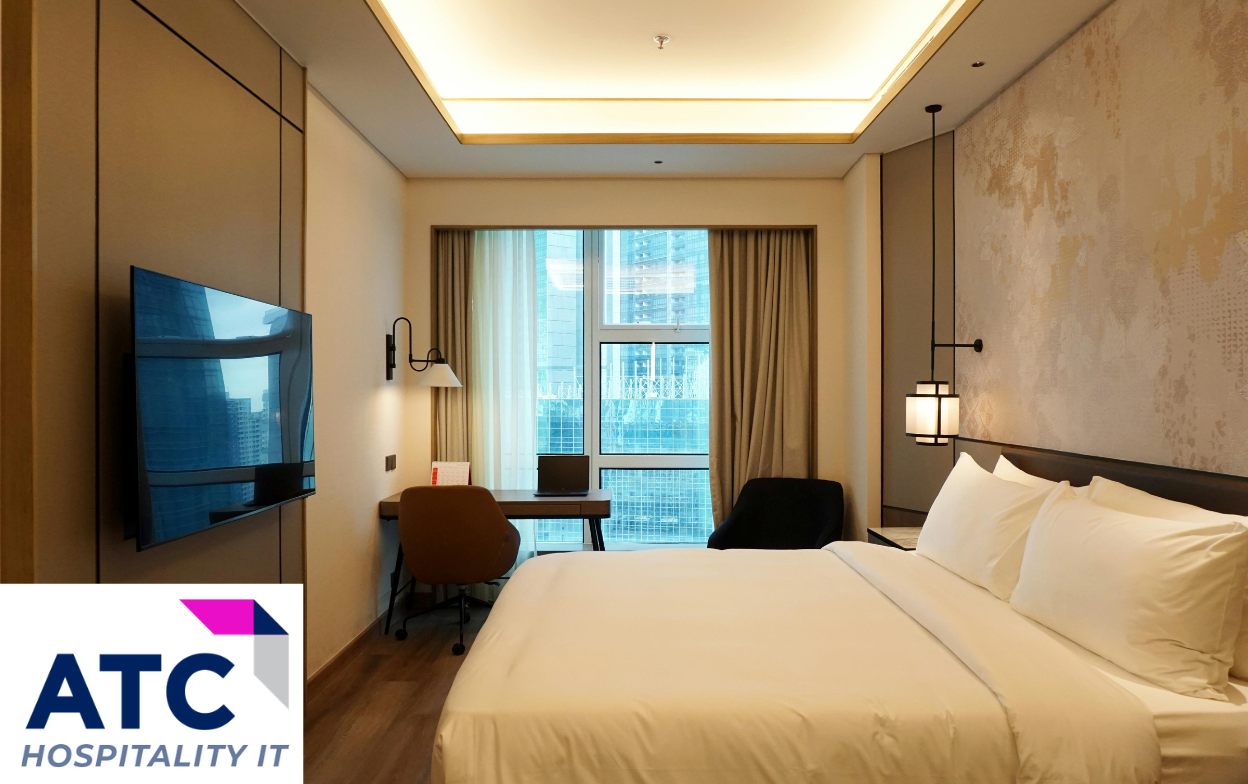
Guest room entertainment is one of those things guests rarely think about until it does not work.
When it works, it feels invisible. The TV turns on quickly, casting is simple, channels are where they should be, and everything behaves the way it does at home.
When it does not, it becomes one of the fastest ways to frustrate a guest.
That is why guest room entertainment systems, often referred to as GRE, are no longer just an amenity. They are part of the baseline guest experience.
GRE is more than just the TV
It is easy to think of GRE as the television mounted on the wall.
In reality, it is a combination of systems working together.
The display itself, the content source, casting capability, channel lineup, network connectivity, and the interface all play a role. If any one of those elements falls short, the entire experience feels dated.
This is where many properties underestimate the complexity.
Upgrading a TV without addressing the rest of the system rarely solves the problem. The experience is only as strong as the weakest component behind it.
Guest expectations are shaped outside the hotel
One of the biggest shifts in GRE has nothing to do with hotels.
It comes from what guests experience at home.
Streaming platforms, personalized content, simple interfaces, and fast performance have set a new baseline. Guests are used to logging into their accounts, casting from their devices, and navigating familiar environments.
When they walk into a hotel room, they expect something close to that experience.
Not identical, but close enough that it feels intuitive.
This is why in-room entertainment hotel systems have moved away from static channel lineups and toward more flexible, guest-controlled experiences.
Casting is no longer optional
Casting has quickly become one of the most expected features in modern GRE.
Guests want to use their own content. They want to open Netflix, YouTube, or other platforms from their phone and send it directly to the TV without dealing with complicated setup steps.
If that process is slow or unreliable, the frustration is immediate.
From an operational perspective, casting introduces additional considerations.
Network performance becomes more critical. Device isolation needs to be handled correctly. The system needs to reset cleanly between guests to avoid privacy issues.
This is where GRE ties directly back to the underlying network.
If the network is not designed to support it, the experience will not hold up.
Brand standards are shaping GRE decisions
For flagged properties, GRE is not just a design choice.
Brands are increasingly defining expectations around guest room technology, including television size, interface requirements, casting capabilities, and overall experience.
These standards are designed to create consistency across properties.
They also raise expectations.
Owners cannot treat GRE as a one-off decision during renovation. It needs to align with both brand requirements and guest expectations at the same time.
The lifecycle is shorter than most expect
Unlike some infrastructure, GRE systems tend to age quickly.
Not because the hardware stops working, but because expectations change.
Interfaces that felt modern a few years ago start to feel slow. Features that were considered upgrades become baseline expectations. Content delivery methods evolve.
This creates pressure to refresh more frequently.
Many hotel TV system upgrades are driven not by failure, but by experience gaps. Guests notice when the system feels behind, even if everything technically works.
That is why planning for GRE should include a realistic view of how often updates will be needed.
Simplicity matters more than features
There is a tendency to focus on adding more capability.
More apps, more integrations, more features layered into the system.
In practice, simplicity tends to matter more.
Guests want something that works immediately. Minimal steps. Clear navigation. No confusion about how to access their content or switch between options.
Complex systems often create more support issues.
Front desk teams end up fielding questions. Guests abandon features that are difficult to use. The system becomes underutilized.
The best GRE environments feel simple, even if the underlying system is not.
Support and reliability are part of the experience
GRE does not exist in isolation.
When something goes wrong, it becomes an operational issue.
A TV that does not connect, a casting system that fails, or a channel lineup that does not load properly all create support requests. That impacts staff time and guest satisfaction at the same time.
This is where ongoing support matters.
Reliable systems reduce friction. Clear processes for troubleshooting reduce downtime. Consistent performance reduces the need for intervention.
Modern guest room entertainment systems now have to account for streaming, casting, content access, and a simpler in-room experience, not just the television hardware.
The cost of getting GRE wrong
GRE issues tend to surface quickly.
Guests notice immediately when the system feels outdated or difficult to use. That feedback often shows up in reviews, especially when it affects something as visible as the in-room experience.
Fixing those issues after installation is possible, but it is not always straightforward.
Systems may need to be replaced. Integrations may need to be reworked. Network adjustments may be required to support features that were not fully considered during implementation.
This is where planning matters.
Getting GRE right upfront avoids a cycle of partial fixes and repeated upgrades.
The better question for owners
Instead of asking what TV should go in the room, a better question is:
What experience do we want guests to have when they turn it on?
That question shifts the focus.
It moves the conversation from hardware to experience, from individual components to how everything works together.
Because in modern hotels, guest room entertainment systems are not just about content.
They are about how easy it is for guests to feel at home.